
Stop Chasing Symptoms. Start Solving the Source.
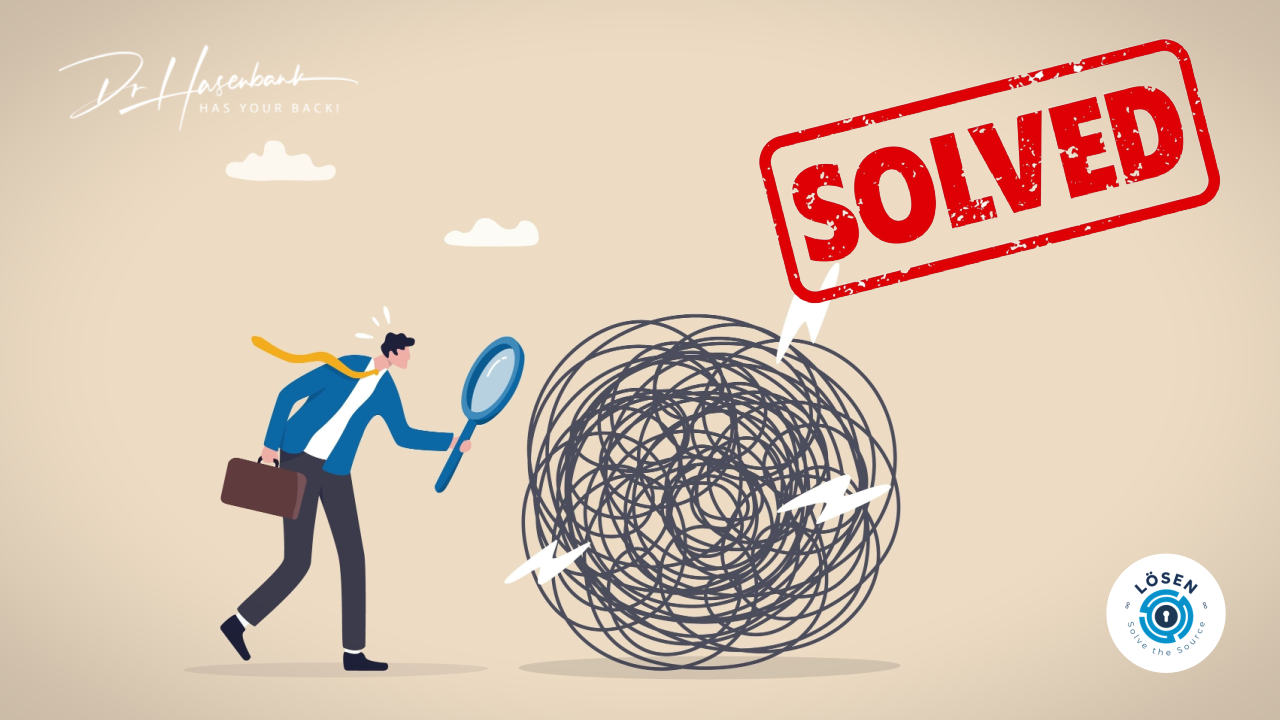
Stop Chasing Symptoms. Start Solving the Source.
Symptom relief may help in the short-term, but is temporary. Lasting resolution begins when you resolve the tension patterns that are driving the symptoms in the first place.
Most people spend years chasing symptoms.
The neck tightens.
The back locks up.
The shoulder becomes inflamed.
The hips lose mobility.
The headaches return.
So they search for something to calm the symptom.
- stretching
- massage
- adjustments
- pain medication
- foam rolling
- ice and heat
- another therapy
- another quick fix
And sometimes those strategies help temporarily.
The pain decreases.
The tension loosens.
Movement improves for a while.
But then the symptoms return.
The same flare-up.
The same tightness.
The same inflammation.
The same recurring problem.
The body keeps repeating the symptom because the source driving the symptom never changed.
This is the trap of symptom chasing.
People spend years trying to silence the signals without ever decoding why the body keeps sending them.
Symptoms Are Often the Final Signal
Most chronic problems begin long before pain becomes obvious.
The body usually communicates first through:
- tightness
- stiffness
- mobility loss
- movement hesitation
- fatigue
- recurring tension patterns
- slower recovery
But most people ignore those earlier signals because they can still function.
Eventually, the body increases protection.
Compensation patterns deepen.
Inflammation rises.
The nervous system becomes more reactive.
Pain finally appears.
Pain is often the final stage of a tension pattern the body has been managing for years.
That means the painful area is not always the true source of the problem.
The Tight Muscle Is Often Not the Problem
Most people focus only on where the symptom appears.
If the neck hurts, they treat the neck.
If the low back tightens, they stretch the low back.
If the shoulder becomes inflamed, they focus only on the shoulder.
But the body functions as an interconnected system.
The painful area is often the area compensating — not necessarily the area creating the problem.
For example:
- tight hamstrings may compensate for poor pelvic stability
- neck tension may reflect breathing dysfunction or shoulder instability
- low back tightness may develop from hip compensation patterns
- shoulder pain may stem from thoracic restriction and poor load distribution
- knee pain may reflect instability through the feet and hips
The body often overloads one area while protecting another.
The symptom often reveals where stress is expressing itself — not necessarily where the problem began.
Why Temporary Relief Keeps Failing
Relief matters.
Reducing pain and calming inflammation can help the body feel safer temporarily.
But if the body still experiences:
- movement inefficiency
- chronic overload
- instability
- poor recovery
- compensation patterns
- protective tension
…it often rebuilds the same symptoms again.
This is why people experience:
- recurring tightness
- returning inflammation
- temporary mobility gains
- constant body maintenance
- repeated flare-ups
- pain that never fully stays away
You cannot permanently calm a symptom while continually recreating the reason for the symptom.
Muscle Tension Is Often the Clue
Muscle tension is rarely random.
The body often creates tension to:
- protect overloaded tissues
- stabilize inefficient movement
- reduce perceived threat
- compensate for instability
- maintain function during stress
- limit movement the body no longer trusts
This means tension is often communication.
It is the body revealing where reliability has been lost inside the system.
Tension is not always the enemy. Often, it is the clue.
That changes the entire approach.
Because instead of fighting the tension endlessly, we begin decoding why the body created the tension in the first place.
Your Body’s Not Stuck. It’s Adapting.
Many people eventually begin believing their body is broken down, aging poorly, or permanently damaged.
But the body is constantly adapting to the demands placed on it repeatedly.
If the body repeatedly experiences:
- overload
- stress accumulation
- movement inefficiency
- poor recovery
- compensation patterns
- protective tension
…it adapts around those conditions.
But adaptation works both ways.
When movement improves, overload decreases, recovery improves, and compensation patterns resolve, the body often becomes less protective as well.
Your body’s not stuck. It may simply be adapting around unresolved tension patterns.
RELIEVE: Calm the Protective System
RELIEVE is the first phase of THE LÖSEN SOLUTION™ because an overloaded, reactive system often needs enough calm before deeper restoration can happen.
Reducing pain, inflammation, irritation, and excessive muscle tension helps the body move out of constant protection mode.
This phase creates the opportunity for the system to stop fighting for survival long enough to begin rebuilding reliability.
Relief matters. But relief alone is not resolution.
RESTORE: Solve the Source Behind the Pattern
RESTORE is where deeper change begins.
This phase focuses on uncovering and rebuilding the systems the body no longer fully trusts.
RESTORE asks:
- What tension pattern keeps repeating?
- Where is the body compensating?
- What movement became inefficient?
- What tissues are repeatedly overloaded?
- What system stopped contributing properly?
- What would reduce the body’s need for protection?
As movement reliability, stability, coordination, breathing mechanics, and recovery improve, the body often stops relying on the same chronic tension patterns to function.
This is where recurring symptoms begin losing their grip.
The goal is not simply reducing symptoms. The goal is resolving the pattern recreating the symptoms.
OPTIMIZE: Build a More Reliable Body
OPTIMIZE is where the body moves beyond constant protection and into resilience, durability, and sustainable performance.
As the system becomes more reliable, the body often becomes:
- less reactive
- less inflammatory
- more mobile
- more adaptable under stress
- more efficient during movement
- more capable during performance
- faster to recover
The goal is not endless symptom management.
The goal is building a body that functions more efficiently, recovers more consistently, and performs more reliably under the demands of life.
The Shift: From Symptom Chasing to Source Resolution
Most people spend years reacting to symptoms instead of understanding the tension patterns underneath the symptoms.
But recurring pain, inflammation, tightness, and mobility loss are often not random problems.
They are signals.
Signals that the body has been compensating, protecting, and overloading inefficient patterns for far too long.
Stop chasing symptoms. Start solving the source.
That is the foundation of THE LÖSEN SOLUTION™.
Decode the tension.
Solve the source.
Restore reliability.
Ready to Stop Living Inside the Symptom Cycle?
If pain, tightness, inflammation, stiffness, and recurring movement problems keep returning, your body may not be failing.
It may be trapped inside unresolved tension patterns and chronic overload that have never been fully decoded.
THE LÖSEN SOLUTION™ helps people uncover the hidden drivers behind those patterns so they can restore movement reliability, reduce protective tension, and rebuild a body that feels stronger, more resilient, and more capable again.
Not by chasing symptoms.
By solving the source.
Dr. JD Hasenbank
Architect of Human Reliability™
Creator of THE LÖSEN SOLUTION™
Your guide to building a body that enhances life instead of interrupting it.
TEXT: 615-600-4747
www.solvethesource.com
SOLVE THE SOURCE, LLC